The Author

The practice behind
the model.

The D.I.D. operational model grew out of more than two decades of direct experience building and transforming product organizations — integrating disciplines that are rarely connected in practice.

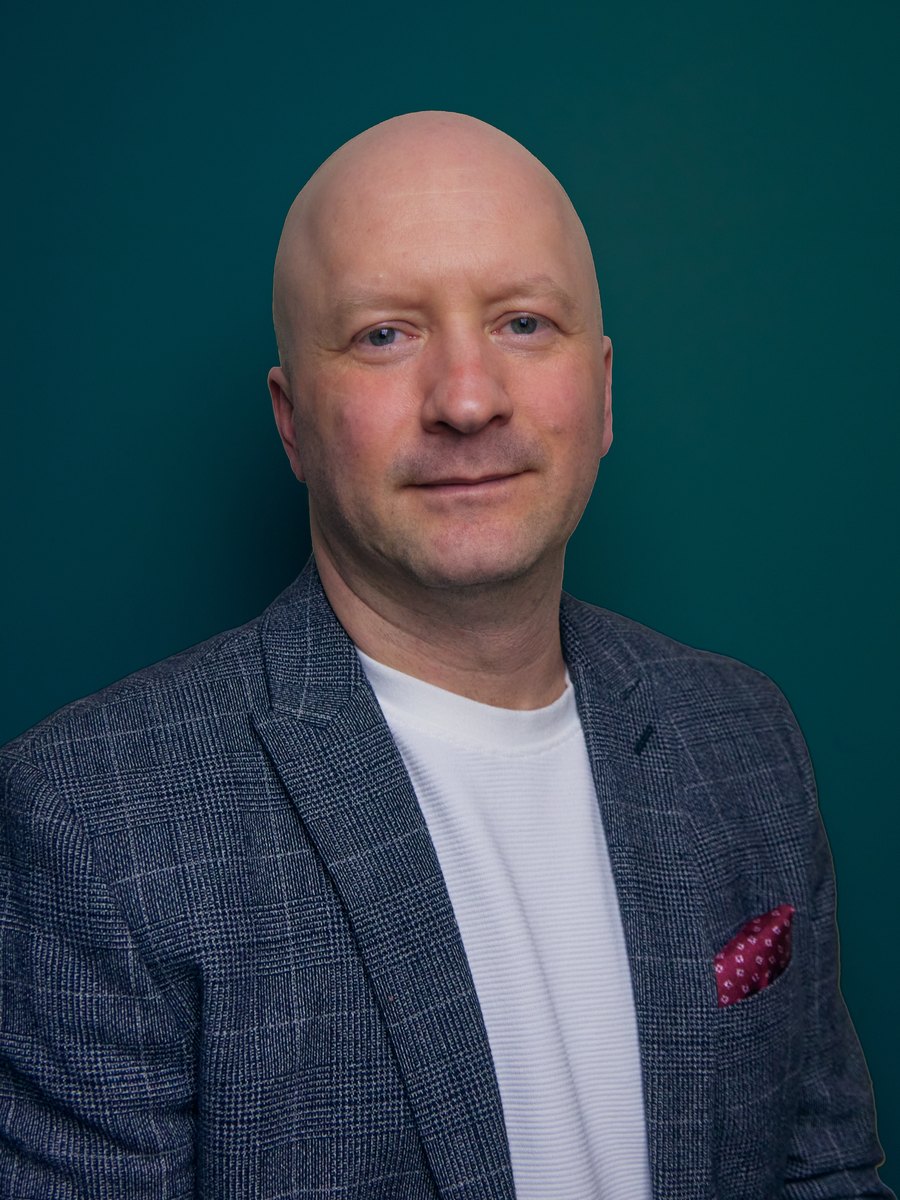
Portrait of Eugene Sazhin
Speaking Inquiry LinkedIn

Eugene Sazhin

Outcome-Driven Innovation Stream-Aligned Operational Models Continuous Delivery Product Engineering Leadership Jobs-to-be-Done

Eugene is an engineering leader with 25+ years building, transforming, and shipping software product organizations. From 2019 to 2026 he was Head of Engineering for PACE — UST Global's multi-module Internal Developer Platform offering — where he owned product development end to end across an eight-module portfolio and built and refined the operational model that became Discover Innovate Deliver. His organization ran engineering, design, technical writing, and scrum mastery across eight stream-aligned product teams, an AI/ML enablement team, and platform infrastructure — up to 70 people in all. Today he focuses on the book and on advisory work helping product organizations adopt the model.

His work is anchored by a single conviction: most product organizations fail not for lack of talent or effort, but for lack of a coherent operational model that connects what customers actually need to what gets built and shipped. Eugene has spent over two decades replacing output-driven cultures with evidence-first practice — taking a main product line from quarterly releases to a bi-weekly cadence sustained since 2020, retiring centralized QA functions in favor of built-in quality, introducing trunk-based discipline at scale, and proving the operating principles through measurable outcomes — including a Toyota-Kata-style transitional experiment that drove an ~80% reduction in monthly defect counts across his teams, from roughly 120 to 24.

In 2024, UST Global published Eugene's Delivery Improvement Framework (DIF) — the consolidation of the operating principles he had been refining inside the company. The New Stack covered the framework shortly after publication. Discover Innovate Deliver extends DIF into the full operational model, with the depth and practitioner detail that a framework document couldn't carry alone.

Intellectual Foundations

Eugene's thinking integrates Jobs-to-be-Done (Strategyn — Tony Ulwick), Continuous Delivery (Humble & Farley), Team Topologies (Skelton & Pais), Toyota Kata (Mike Rother), and the DevOps performance research consolidated in Accelerate (Forsgren, Humble, Kim). He has actively brought these disciplines into his organization through layered training programs — direct workshops by Strategyn for team members, and by Continuous Delivery Ltd. (David Farley's organization) for engineering leads.

Experience & Credentials

Product Engineering LeadershipHead of Engineering at UST Global (2019–2026), leading a multi-disciplinary product engineering org of up to 70 across eight stream-aligned product teams, AI/ML enablement, and platform infrastructure. The org spanned engineering, design, technical writing, and scrum mastery — covering the full PACE Internal Developer Platform portfolio across platform-engineering and engineering-effectiveness tooling, data tooling, assessment, FinOps, and AI-agentic offerings, spanning five adjacent market categories.
Operational Model PractitionerAuthor of UST Global's Delivery Improvement Framework (2024), covered by The New Stack. PACE served as the multi-year proving ground for the principles consolidated in DIF and Discover Innovate Deliver — including a bi-weekly production cadence on the main product line sustained since 2020, the 2024 absorption and turnaround of the FinOps product line to weekly releases via stream-aligned restructuring, and the bug-case transformation documented as a chapter in the book.
Capability BuilderStrategyn-certified (Outcome-Driven Innovation, 2024). Designed and delivered internal workshops on Continuous Delivery, ODI, and Hubbard-method estimation calibration; sponsored external training from Strategyn (JTBD/ODI originators) for team members and Continuous Delivery Ltd. (David Farley's organization) for engineering leads.
Patent & Prior WorkUS Patent 11,204,762 (feature tracking in development environments, 2021). Earlier engineering leadership at ODH Inc (healthcare data analytics; built the DevOps function from scratch; drove cloud migration with concurrent stack modernization for 75% hosting savings), Interactive Brokers Group (introduced Continuous Integration to the company; built the foundational developer platform across 2,500+ repositories and 150+ engineers), and Futuretrade Technologies (built the QA function from QA Engineer to Director over eight years).

Beyond the work, Eugene is a musician — half of Dusty Wings, a long-running music collaboration. He's an active photographer and woodworking practitioner, holds 2nd Dan in kendo, and built MusicCat.studio — an AI-powered catalogue tool that scans DAW projects and analyzes mixdowns to give musicians a searchable record of their entire body of work — as a personal project.

Why I wrote Discover Innovate Deliver

The immediate push was personal. For years I explained my approach to my teams the only way I could: piece by piece, whenever a situation called for it. The whole picture had crystallized in my head over two decades — but nobody could assemble it from fragments delivered in design reviews and hallway conversations, and with every new person who joined, the explanation started over from the beginning. Then a colleague remarked that working with me was a rare case where technical direction and best practices aren't isolated decisions but parts of one coherent philosophy — and the conclusion became obvious: write it down.

The deeper reason is that the philosophy answers a problem much bigger than my own teams. I kept having the same conversation. In organization after organization, I would find the same pattern: talented people, genuine commitment to quality, real effort — and still, 75–90% of what was built failed to move the needle for customers.

Seeing these patterns repeat across different organizations got me thinking about what they had in common. What I came to understand is that these patterns appear when an organization is missing a coherent operating system — something to connect what customers actually need to what gets built and shipped.

Product strategy was disconnected from engineering reality. Customer discovery was disconnected from delivery cadence. Continuous improvement was substituted by retrospective meetings with no follow-up. Every discipline existed in its own world — and the connective tissue between them was missing.

I've spent my career trying to build that connective tissue. D.I.D. is the formalization of what I've learned about how to do it. And instead of creating yet another framework to comply with, I'm framing it as an operational model to build and own.

Written from practice

Everything in this book was learned and tried over the years — built, argued over, resisted, and refined inside real product organizations under real delivery pressure. The bug-case transformation that cut monthly defect counts by roughly 80% gets a chapter of its own. When something only worked under specific conditions, I say so — and when I got it wrong the first time, I say that too.

What "uncompromising" means

The book is uncompromising first about what value actually means: value is a measurable change in customer behavior — not features shipped, deadlines met, or velocity achieved. Everything else in the operational model follows from holding that line, and most of the difficulty of adopting D.I.D. comes from how much of the conventional playbook has to be given up in order to hold it.

It is equally uncompromising about grounding. The model is built on scientifically and empirically proven foundations — Jobs-to-be-Done theory, the research behind Continuous Delivery, Team Topologies, Toyota Kata — and it demands the same standard from the organizations that adopt it: the direction forward is chosen on scientific and empirical evidence, not on opinion, seniority, or convention.

Want to work with Eugene?

Advisory engagements, keynote speaking, workshop facilitation, and media appearances. Get in touch and tell me about your situation.