The Authors

Not theorizing from a distance.
Built from direct transformation work.

The D.I.D. operating model is not a framework assembled from books. It is the product of years of direct experience building and transforming product organizations — integrating disciplines that are rarely connected in practice.

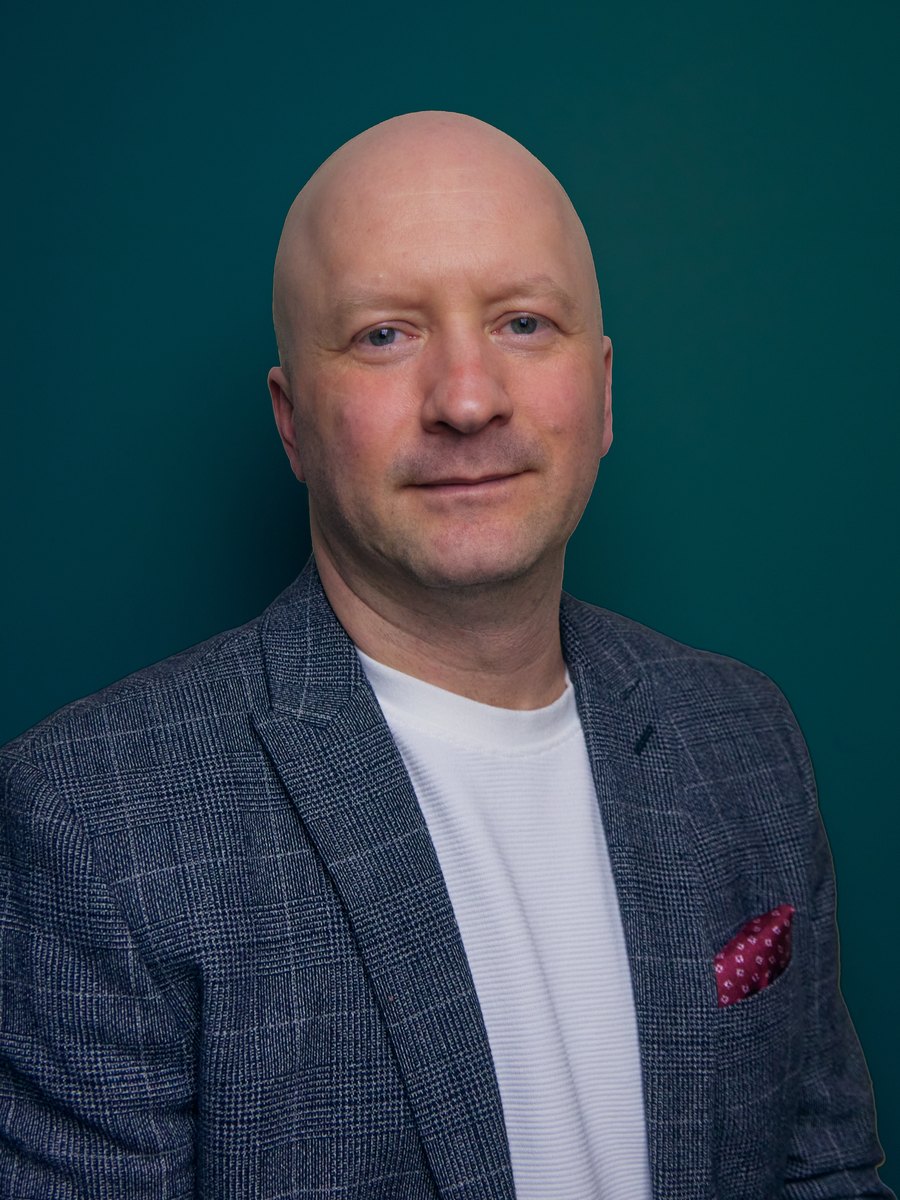
Portrait of Eugene Sazhin
Speaking Inquiry LinkedIn

Eugene Sazhin

Outcome-Driven Innovation Stream-Aligned Operating Models Continuous Delivery Product Engineering Leadership Jobs-to-be-Done

Eugene is an engineering leader with 25+ years building, transforming, and shipping software product organizations. From 2019 to 2026 he was Head of Engineering for PACE — UST Global's multi-module Internal Developer Platform offering — where he owned product development end to end across an eight-module portfolio and built and refined the operating model that became Discover Innovate Deliver. His organization ran engineering, design, technical writing, and scrum mastery across eight stream-aligned product teams, an AI/ML enablement team, and platform infrastructure — up to 70 people in all. Today he focuses on the book and on advisory work helping product organizations adopt the model.

His work is anchored by a single conviction: most product organizations fail not for lack of talent or effort, but for lack of a coherent operating model that connects what customers actually need to what gets built and shipped. Eugene has spent over two decades replacing output-driven cultures with evidence-first practice — taking a main product line from quarterly releases to a bi-weekly cadence sustained since 2020, retiring centralized QA functions in favor of built-in quality, introducing trunk-based discipline at scale, and proving the operating principles through measurable outcomes — including a Toyota-Kata-style transitional experiment that drove an ~80% reduction in monthly defect counts across his teams, from roughly 120 to 24.

In 2024, UST Global published Eugene's Delivery Improvement Framework (DIF) — the consolidation of the operating principles he had been refining inside the company. The New Stack covered the framework shortly after publication. Discover Innovate Deliver, written jointly with Samuel Wachtel, extends DIF into the full operating model and adds the practitioner-narrative depth that DIF couldn't carry alone.

Intellectual Foundations

Eugene's thinking integrates Jobs-to-be-Done (Strategyn — Tony Ulwick), Continuous Delivery (Humble & Farley), Team Topologies (Skelton & Pais), Toyota Kata (Mike Rother), and the DevOps performance research consolidated in Accelerate (Forsgren, Humble, Kim). He has actively brought these disciplines into his organization through layered training programs — direct workshops by Strategyn for team members, and by Continuous Delivery Ltd. (David Farley's organization) for engineering leads.

Experience & Credentials

Product Engineering LeadershipHead of Engineering at UST Global (2019–2026), leading a multi-disciplinary product engineering org of up to 70 across eight stream-aligned product teams, AI/ML enablement, and platform infrastructure. The org spanned engineering, design, technical writing, and scrum mastery — covering the full PACE Internal Developer Platform portfolio across platform-engineering and engineering-effectiveness tooling, data tooling, assessment, FinOps, and AI-agentic offerings, spanning five adjacent market categories.
Operating Model PractitionerAuthor of UST Global's Delivery Improvement Framework (2024), covered by The New Stack. PACE served as the multi-year proving ground for the principles consolidated in DIF and Discover Innovate Deliver — including a bi-weekly production cadence on the main product line sustained since 2020, the 2024 absorption and turnaround of the FinOps product line to weekly releases via stream-aligned restructuring, and the bug-case transformation documented as a chapter in the book.
Capability BuilderStrategyn-certified (Outcome-Driven Innovation, 2024). Designed and delivered internal workshops on Continuous Delivery, ODI, and Hubbard-method estimation calibration; sponsored external training from Strategyn (JTBD/ODI originators) for team members and Continuous Delivery Ltd. (David Farley's organization) for engineering leads.
Patent & Prior WorkUS Patent 11,204,762 (feature tracking in development environments, 2021). Earlier engineering leadership at ODH Inc (healthcare data analytics; built the DevOps function from scratch; drove cloud migration with concurrent stack modernization for 75% hosting savings), Interactive Brokers Group (introduced Continuous Integration to the company; built the foundational developer platform across 2,500+ repositories and 150+ engineers), and Futuretrade Technologies (built the QA function from QA Engineer to Director over eight years).

Beyond the work, Eugene is a musician — half of Dusty Wings, a music collaboration with Samuel Wachtel that predates the book. He's an active photographer and woodworking practitioner, holds 2nd Dan in kendo, and built MusicCat.studio — an AI-powered catalogue tool that scans DAW projects and analyzes mixdowns to give musicians a searchable record of their entire body of work — as a personal project.

S
Samuel Wachtel
Speaking Inquiry LinkedIn

Samuel Wachtel

Applied AI Data & Semantic Platforms Product Strategy Delivery Leadership

Sam has spent close to thirty years shipping software into places where mistakes are expensive: clinical trial operations, population-scale behavioral health intervention, claims analytics, and now applied AI at NewAmsterdam Pharma, where he is Executive Director of Applied AI Solutions, building the platforms that let people and AI agents alike pull trusted answers out of clinical data. He has been a developer, a product manager, and an engineering leader, often all three at the same time. Underneath all of it, one conviction: delivery isn't the step after the real work. Delivery is where an organization finally starts to learn. In D.I.D., Sam owns the story itself: the book's transformation from framework into novel.

Before NewAmsterdam: eleven years at the Otsuka digital-health companies, where he built a patient-population management platform for a behavioral health payer, data and analytics systems, a claims analytics platform, patient-support tools for insights and next-best actions, and finally arriving at AI in the final stretch, the way everyone did, except he had the platforms and strategies ready for it. Along the way he owned UX, engineering design, analytics, and business analysis, leading teams of ten-plus across development, testing, and everything in between. Before that, thirteen years as Executive Director of Business Technology at Comprehensive Clinical Development, where one system he built ran in production for nineteen years. It was decommissioned in 2025, by which point it was old enough to choose an undergrad major.

He studied psychology and classical piano performance at Sarah Lawrence College, which is either strange preparation for a software career or exactly the right one. The music stuck. Sam still writes songs, lyrics, occasional short stories, and — well — now a book. He also plays and sings in Dusty Wings, the band he shares with Eugene. Yes, the co-authors are also bandmates. The book has better version control.

Experience & Credentials

Applied AI LeadershipExecutive Director of Applied AI Solutions at NewAmsterdam Pharma — building the data and semantic platforms that let people and AI agents alike pull trusted answers out of clinical data.
Digital Health & AnalyticsEleven years at the Otsuka digital-health companies: a patient-population management platform for a behavioral health payer, claims analytics, and patient-support tools for insights and next-best actions — owning UX, engineering design, analytics, and business analysis while leading teams of ten-plus.
Business Technology LeadershipThirteen years as Executive Director of Business Technology at Comprehensive Clinical Development, where one system he built ran in production for nineteen years — decommissioned in 2025.
The NovelOwner of the story in Discover Innovate Deliver — the book's transformation from framework into novel, told through the FlowState Digital narrative. A songwriter and lifelong musician, Sam plays and sings in Dusty Wings, the band he shares with Eugene.

Why we wrote Discover Innovate Deliver

We wrote this book because we kept having the same conversation. In organization after organization, we would find the same pattern: talented people, genuine commitment to quality, real effort — and still, 75–90% of what was built failed to move the needle for customers.

The cause was never talent. It was never effort. It was the absence of a coherent operating system that connected what customers actually needed to what was getting built and shipped.

Product strategy was disconnected from engineering reality. Customer discovery was disconnected from delivery cadence. Continuous improvement was treated as a retrospective ceremony rather than an operational capability. Every discipline existed in its own world — and the connective tissue between them was missing.

We've both spent our careers trying to build that connective tissue. D.I.D. is the formalization of what we've learned about how to do it — not as a framework to comply with, but as an operating model to build and own.

Two Books in One

Discover Innovate Deliver is deliberately built in two parts. It opens as a novel: inside a fictional company called FlowState Digital, a product team lives through a real transformation — the tensions, the resistance, the breakthroughs. The second part is the original educational material the book grew from: the complete D.I.D. operating model, delivered in our own voice as a practical guide, with each principle tied back to the moment in the story where it earns its keep.

Why a Novel?

We chose the IT Novel format — pioneered by Gene Kim in The Phoenix Project — because operating model change is fundamentally a human problem, not a process problem. FlowState Digital's story lets readers experience the transformation, not just understand it intellectually. You see how the tensions feel, how the resistance manifests, and how the breakthrough happens — in a way that a pure nonfiction treatment cannot deliver. That's why the story comes first: by the time the guide speaks plainly, you've already lived what it's describing.

The characters in the book are composites of the real leaders, engineers, and practitioners we've worked with. Their struggles are real. Their breakthroughs are possible. And the operating model they build is one any organization can build — if they're willing to be uncompromising about what value actually means.

Want to work with
Eugene or Samuel?

Advisory engagements, keynote speaking, workshop facilitation, and media appearances. Get in touch and tell us about your situation.